



How to Choose the Right Career Path in 2025 — A Complete Guide
If you’re wondering how to choose the right career path in 2025 whether you’re a fresh graduate, someone switching fields or simply exploring options — you’re in the right place. The job-market landscape is shifting rapidly, and making a thoughtful decision about your career direction matters more than ever. This guide will walk you through a proven, human-centered process to find a career path aligned with your values, skills, and changing industry demands.
1. Understand Yourself: Interests, Strengths & Values
Before anything else — the first step to choose the right career path in 2025 is honest self-assessment. Ask yourself:
-
What kinds of tasks energize you — creative work, analytic work, people interaction, problem-solving?
-
What are your strengths (skills you enjoy using + are good at)? And are there areas where you’d like to improve?
-
What matters most to you: stability, high growth, creativity, work-life balance, impact, learning opportunities, or flexibility?
By clarifying your interests, strengths and personal values, you narrow down career options that match your personality — making your career choice more satisfying in the long run.
2. Research Market Trends & Future Demand
2025 is a rapidly evolving year for careers — technology shifts, remote work, demand for new skills and changing global dynamics. To choose the right career path, you must align personal fit and market demand.
-
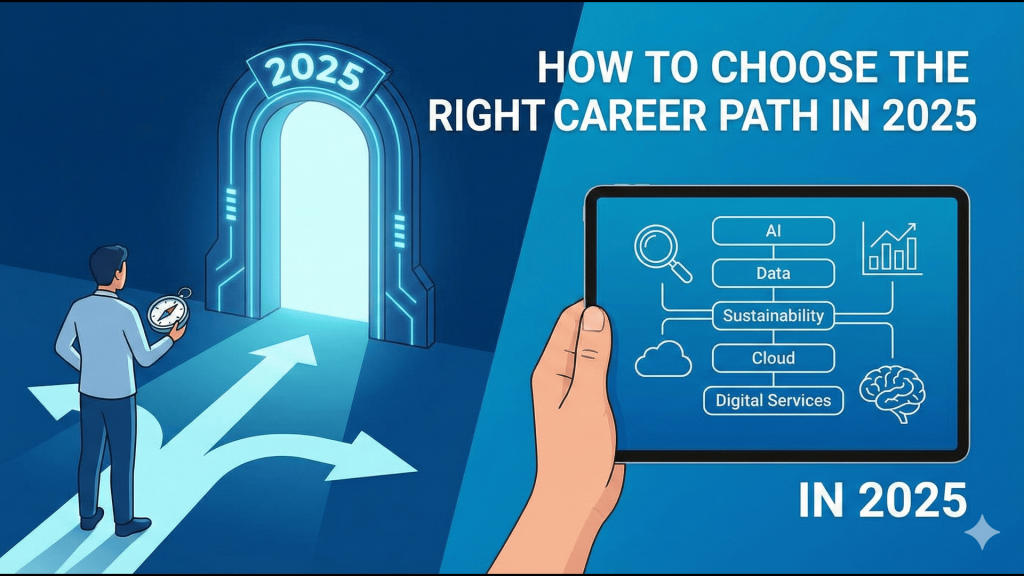
Emerging sectors: roles in AI, data, cloud, sustainability, digital services — many reports show strong growth and long-term demand.
-
Flexibility & hybrid work: Many companies now offer remote/hybrid models, making some tech or data-oriented roles location-agnostic.
-
Transferable skills matter: Skills like analytical thinking, adaptability, communication, problem-solving help in multiple domains — not just one industry.
By combining self-understanding with market insight, you increase chances to pick a career path that not only fits you, but also will stay relevant for years to come.
3. Shortlist & Evaluate Career Options
Once you know your strengths and the market demands time to build a short-list. But don’t just rely on gut feeling. Evaluate each option based on:
-
Required skills / education — Do you meet them? Or are you willing to learn / upskill?
-
Growth opportunities & stability — Is the field growing? Are there long-term prospects or emerging demand?
-
Your personal goals & priorities — Does the career align with what you value (work-life balance, impact, creativity, stability, learning)?
Make a small pros/cons list for each — this helps you compare options logically and pick a path that feels right on paper and in heart.
4. Test & Explore Gain Experience Before Fully Committing
Often the best way to truly know whether a career suits you is by trying it before investing years of education or commitment. Some ways to test:
-
Internships / freelance / short-term projects help you get a feel of daily tasks, work environment, and whether you enjoy the role’s rhythm.
-
Online courses / certifications / part-time learning upgrades your skills and helps decide suitability for roles without quitting current job.
-
Informational interviews / networking / mentorship talk to people working in that field, ask about pros/cons, growth scope & real-life challenges.
This kind of experimentation reduces risk and often leads to clearer clarity about whether a career path truly suits you.
5. Build a Career Plan Set Short- & Long-Term Goals
Choosing a career path doesn’t end at “decision taken.” It involves a continuous plan and periodic re-evaluation. Here’s how to build a flexible but effective career plan:
-
Define short-term objectives: Skills to acquire, certifications, internships, or projects that help you enter the field.
-
Define long-term vision: What role you aim for in 5–10 years; what growth looks like; what skills or experiences you need.
-
Stay open to reassessment and pivoting industries change fast, be ready to learn new skills or shift as needed.
A deliberate plan reduces confusion and gives a roadmap. It also helps when opportunities or realities change — you already have a direction and can adapt.
6. Combine Strengths + Market Demand + Flexibility The Balanced Approach
The smartest way to choose the right career path in 2025 is by combining three dimensions:
-
What you love & are good at (strengths, interests, values)
-
What the job-market demands & values (growing fields, in demand skills)
-
What gives flexibility & future-proofing (transferable skills, adaptability, readiness to reskill)
This kind of balanced decision tends to give not just early success but long term satisfaction, growth, and resilience against changes.
Summary Steps to Choose the Right Career Path in 2025
| Step | What to do |
|---|---|
| 1 | Do honest self-assessment (interests, values, skills) |
| 2 | Research industry trends & job market demand for 2025 and beyond |
| 3 | Shortlist + evaluate 2–4 realistic career options |
| 4 | Test & explore chosen fields through courses, internships or talking to professionals |
| 5 | Make a flexible career plan with short-term and long-term goals |
| 6 | Reassess periodically and stay adaptable to change |
Final Thoughts
Choosing the right career path in 2025 isn’t about sticking to a rigid, “one size fits all” formula. It’s about introspection + informed research + thoughtful experimentation + planning. When you approach your career with curiosity, self-awareness, and flexibility you not only increase your chances of success, but also build a sustainable, fulfilling path.
Whether you’re about to pick your first job, considering a shift or simply want clarity this guide gives you a roadmap to confidently choose a career path that works for you now and tomorrow.
For more job insights, career advice and guidance visit Simplify Job Search.